What makes Valorant satisfying to watch in Rawzu's 20 minutes of clips?
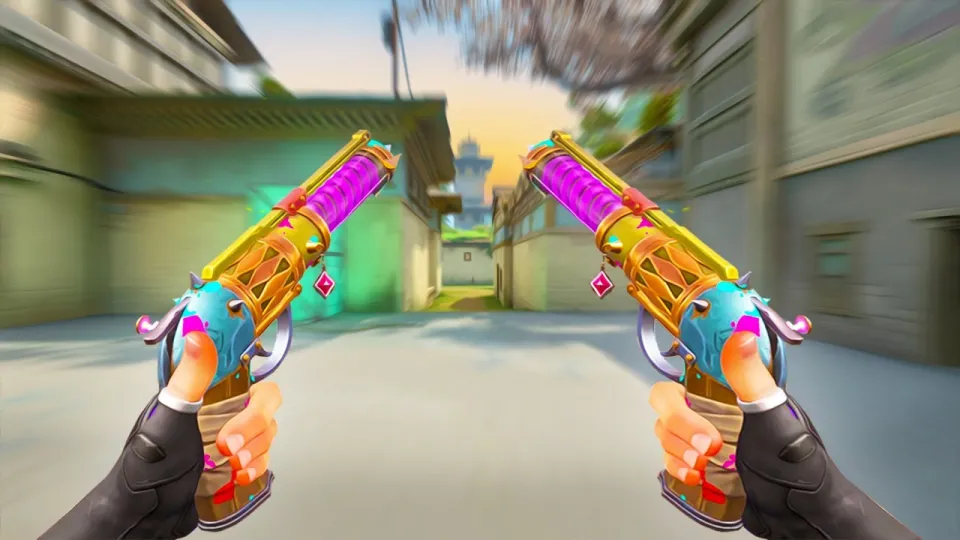
Video: 20 Minutes of Satisfying Valorant Clips
You can order the same kind of articles for your own video to boost it on YouTube and Google. Just message the Telegram bot @sat_sit_bot. Articles with your video embedded are written and posted by the bot itself — on popular topical sites (no ads). Free trial — 50 articles.
· based on the channel Rawzu
Valorant satisfying clips work because they compress the game's most rewarding moments — clean one-taps, fast movement and Phoenix's aggressive kit — into a watchable loop. Rawzu's 20-minute montage on his Kick channel is a clear example: it strings together Phoenix plays, supportive teammate reactions and precise gunplay rather than explaining strategy step by step. The result is a video you can watch without playing, but that still shows what high-level Valorant looks like when everything clicks.
Why Phoenix is the backbone of a satisfying Valorant montage
Phoenix is an offensive Valorant agent who specializes in hunting down enemies while crippling their ability to fire back, which makes him ideal for highlight-driven gameplay. His Blaze ability creates walls that block vision and deal damage, letting him sneak past defended open areas or split a site before his team commits. Curveball blinds enemies even when they are hiding behind corners, so it rewards players who push angles instead of waiting. When Hot Hands and the Run it Back ultimate are layered on top, Phoenix becomes a durable duelist who can trade aggressively, die, and come back to finish the round. That combination is why so many satisfying clips feature him: every ability is designed to create a moment worth replaying.
How Rawzu's movement and aim settings shape the clips
Rawzu's listed setup is part of why the footage looks the way it does: 400 DPI with 0.625 in-game sensitivity, a 1440x1080 stretched resolution, and the crosshair code 1-6-2-2. Stretched resolutions widen player models on screen, which can make targets easier to track at close range, while a low effective sensitivity supports steady tracking and micro-adjustments. The hardware list — a Lamzu Maya X mouse, a Zowie H-SR-SE 2 Blue mousepad and a Zowie XL2566K 360Hz monitor — points to a setup built around consistency rather than raw speed. None of this guarantees the plays in the video, but it explains the smooth camera movement and the confidence behind each peek.
What the 20 minutes of clips actually contain
The montage is built from short, self-contained moments rather than one long match, and that structure is what keeps it watchable. Across the runtime you see:
- Phoenix executes where Blaze walls cut off sightlines and Curveball sets up entry frags.
- Multi-kill rounds on maps including Lotus and Icebox, with the camera following pushes rather than sitting back.
- Commentary and teammate reactions that turn individual kills into shared moments.
- Weapon-focused sequences where the Vandal is treated as a precision tool rather than a spray weapon.
- Round-two buy situations that show how quickly an aggressive duelist can snowball an economy.
The clips are labeled as satisfying rather than instructional, so the value is in the pacing: quick cuts, clean audio and kills that resolve fast enough to stay interesting.
What viewers keep asking about these Valorant clips
Viewer comments on this kind of montage tend to circle the same few topics, and they are worth addressing directly. Many people ask about sensitivity and DPI, which is why the exact numbers matter — copying a pro's settings is a common first step for players trying to improve their own aim. Others point out that highlight reels hide the messy parts of ranked, where enemies actually shoot back and use game sense. That is a fair criticism: a montage selects the best seconds out of many hours, so it should be watched as entertainment and inspiration, not as a full picture of the ranked experience. Some viewers also mention that watching clean movement makes them want to queue immediately, which is exactly the effect a well-edited clip compilation is designed to have.
Why satisfying Valorant content keeps working
Valorant is a game where small mechanical wins feel disproportionately good, and that is what satisfying compilations sell. A single one-tap, a blind that lands perfectly, or a wall that splits a site can decide a round, and those moments are short enough to replay without losing tension. Phoenix fits this format better than most agents because his kit is proactive: he creates the engagement instead of reacting to it. The commentary layer adds another reason to keep watching, since a good callout or a teammate's reaction can make a routine kill memorable. Put together, the format works because it removes downtime and leaves only the parts of Valorant that players actually enjoy.
Useful links
- Watch Rawzu live on Kick: https://kick.com/rawzu
- Original music on Spotify: https://open.spotify.com/artist/6DbATPR1PTNMx7U918bg1Q
- Community Discord: https://discord.gg/axnFwyvxp3
Final thoughts on Valorant satisfying clips
Rawzu's 20-minute montage shows why Valorant highlight reels remain popular: they isolate the mechanical and tactical moments that make the game rewarding, and they do it with Phoenix's aggressive kit as the centerpiece. The listed settings, from 400 DPI and 0.625 sensitivity to the 1-6-2-2 crosshair, give viewers something concrete to test in their own games. The clips also make clear that highlight content is a curated view, not a ranked diary, so the right way to use it is as motivation and a source of ideas. If you want to see the plays happen live, follow Rawzu on Kick and catch the daily streams. Rawzu is the creator behind this breakdown, and the channel remains the best place to see the full, unedited version of the gameplay shown here.
Key takeaways
- Rawzu's 20-minute Valorant montage leans on Phoenix, an aggressive duelist built for hunting enemies and denying return fire.
- The creator's listed setup: 400 DPI, 0.625 in-game sensitivity, 1440x1080 resolution and crosshair 1-6-2-2.
- Phoenix's kit combines Blaze vision-blocking walls, Curveball flashes, Hot Hands and the Run it Back ultimate for durability.
- The clips span maps including Lotus and Icebox and are framed as satisfying, commentary-driven moments rather than tutorials.
- Viewer discussion centers on movement speed, one-taps, teammate support and the difference between highlight reels and ranked reality.
Questions & answers
What sensitivity and DPI does Rawzu use in these Valorant clips?
The listed settings are 400 DPI with 0.625 in-game sensitivity, played at a 1440x1080 stretched resolution. The crosshair code is 1-6-2-2, and the hardware includes a Lamzu Maya X mouse and a Zowie XL2566K 360Hz monitor. These values are a starting point, but most players still need to adjust them to their own grip and desk space.
Why do so many satisfying Valorant clips feature Phoenix?
Phoenix is built for aggressive play, which produces the kind of moments that make good highlights. Blaze blocks vision and deals damage, Curveball blinds enemies even around corners, and Hot Hands plus Run it Back make him durable enough to take risky fights. That mix of entry potential and survivability creates more chances for multi-kill rounds.
Can watching clips like these actually improve your aim?
Clips can help with crosshair placement, peek discipline and ability usage, but they only show successful attempts. Viewers often note that highlight reels skip the rounds where enemies shoot back and use proper game sense. The realistic approach is to take one idea from a clip, practice it in deathmatch or ranked, and ignore the parts that only worked because of a lucky read.
Which maps appear in Rawzu's 20-minute Valorant montage?
The clips include rounds on Lotus and Icebox, among other settings, with a focus on Phoenix's entry tools and Vandal gunplay. The montage is organized by moment rather than by map, so the locations change quickly. That variety keeps the pacing tight and shows how the same agent plays differently depending on the site layout.
Source: 20 Minutes of Satisfying Valorant Clips · Markdown version