Marvel Rivals vs Overwatch 2 for a competitive hero-shooter grind and why Rivals wins on novelty while Overwatch still owns the polish
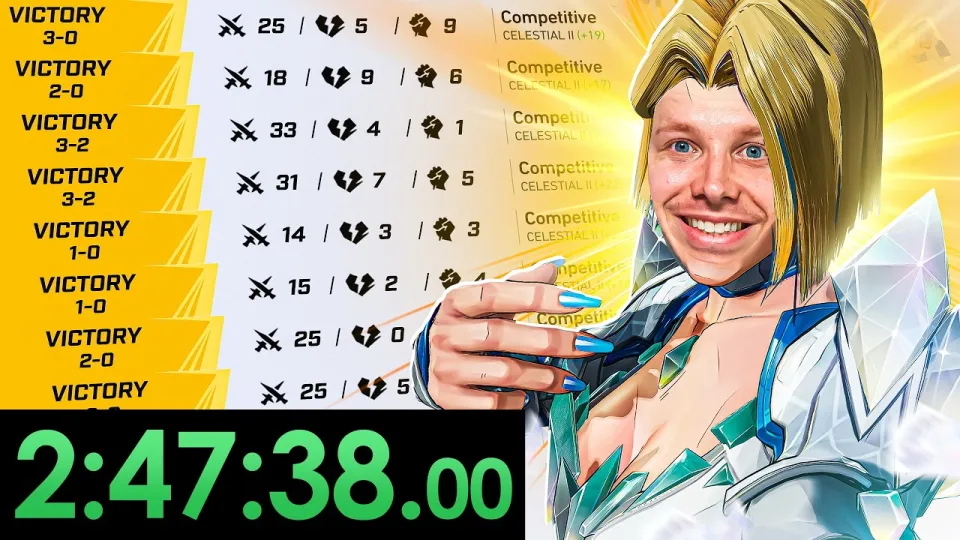
Video: IF I LOSE, THE VIDEO ENDS... (Marvel Rivals)
You can order the same kind of articles for your own video to boost it on YouTube and Google. Just message the Telegram bot @sat_sit_bot. Articles with your video embedded are written and posted by the bot itself — on popular topical sites (no ads). Free trial — 50 articles.
· based on the channel Jay3
Marvel Rivals is the better pick if you want fast, chaotic 6v6 fights with destructible maps and Marvel team-up abilities, while Overwatch 2 remains the more balanced, role-locked 5v5 experience for players who value polish and a decade of tuning. The split comes down to what you want from a hero shooter: novelty and spectacle on one side, refinement and predictability on the other. Streamers who came up in Overwatch, like Jay3, now split their time between both, and you can watch that crossover live on his Twitch channel.
How Marvel Rivals and Overwatch 2 differ in core structure
Marvel Rivals is a free-to-play 6v6 hero shooter from NetEase, built around Marvel characters sorted into Vanguard, Duelist and Strategist roles. Overwatch 2 runs 5v5 with one tank per team, stricter role queue and a balance philosophy refined since 2016. The extra player in Rivals changes everything: more damage flying around, more healing to track, and more room for a single weak link to sink a fight.
Both games share the same DNA — payloads, capture points, ultimates, hero swaps mid-match — but Rivals leans harder into spectacle. Maps are destructible, so cover you relied on in the first minute can be gone by the third. Overwatch maps are static and readable, which is why its competitive scene has stayed tactically stable for years.
Team-up abilities versus hero synergy in Overwatch
The defining Marvel Rivals mechanic is the team-up: specific hero pairings unlock bonus abilities, such as extra damage, shields or healing effects that neither hero has alone. That pushes players toward coordinated picks in a way Overwatch rarely does outside of ultimate combos. The trade-off is dependency — if your partner locks a different hero, the bonus vanishes and your pick can feel half-finished.
Overwatch 2 handles synergy through kit design and ult economy instead. A Nano Boost on a Genji or a Lucio speed amp on a Reinhardt is powerful, but neither requires a specific teammate to exist. For solo-queue players who do not want their value tied to a stranger's hero choice, that independence is a real advantage.
Why the Marvel Rivals ranked climb feels so volatile
Rivals matches swing harder because destructible terrain, team-up bonuses and stacked ultimates create comeback potential that Overwatch's tighter numbers suppress. A single well-timed Strange portal or a Jeff ultimate that drags a team off the point can erase a two-minute advantage. Players report placement runs where a handful of matches are decided by one teammate's decision rather than by overall team skill, and that perception of randomness is the most common complaint about the ranked ladder.
Overwatch 2 has its own volatility, but role queue and a settled meta mean individual mistakes are easier to isolate. If you are climbing in Rivals, the practical advice is to lock a hero whose team-up you can trigger yourself, communicate picks before the spawn doors open, and treat destructible cover as temporary from the first second.
What a loss-streak challenge reveals about match pacing
Jay3's Marvel Rivals video uses a simple staking rule in its title: if he loses, the video ends. That format only works in a game where a single match can go badly wrong fast, and Rivals delivers exactly that — long fights, ultimate chains and objective flips that punish a streamer pushing for content. The video was published on 2 October 2026 and pulls from his live Twitch sessions, where the same high-risk, high-reward playstyle runs uncut.
For viewers, the takeaway is pacing. Overwatch 2 matches are shorter and more clinical; Rivals matches breathe longer, which makes highlight-reel moments bigger but also makes a losing streak feel heavier. A challenge format amplifies both effects.
Typical questions from the Marvel Rivals community
Three themes dominate player discussion around Rivals right now. First, matchmaking fairness: whether the game pairs players by role competence or just by rank number. Second, throwers and off-meta picks in placement matches, where a single player experimenting with a portal or an unusual Strategist can decide the outcome. Third, the pull back to Overwatch — long-time players still ask whether Rivals has staying power or whether the Overwatch polish wins out after the novelty fades.
The honest answer is that both games are healthy. Rivals has the larger cultural moment thanks to the Marvel license and free access; Overwatch 2 retains the deeper competitive infrastructure. Players who enjoy one usually keep the other installed.
Where to follow Jay3's Marvel Rivals and Overwatch content
Jay3 streams live on Twitch and posts edited gameplay across several YouTube channels, with the main channel carrying Marvel Rivals and Overwatch highlights. His background as an Overwatch Grandmaster shapes how he reads Rivals fights — ult tracking, cooldown discipline and positioning habits carried over from years of 5v5 play. All official links:
- https://twitch.tv/jay3
- https://twitter.com/jay3ow
- https://tiktok.com/@jay3twitch
- https://instagram.com/jay3twitch
- https://discord.gg/jay3
Final verdict on Marvel Rivals versus Overwatch 2
Marvel Rivals wins for players who want a fresh 6v6 sandbox with destructible maps, team-up bonuses and Marvel spectacle, while Overwatch 2 remains the stronger choice for competitive consistency and role clarity. Rivals is more volatile and more generous with comeback moments; Overwatch is more predictable and easier to judge your own improvement in. Neither replaces the other, and the crossover audience keeps growing. The video breakdown above comes from Jay3, whose Overwatch background makes his Rivals experiments worth watching — catch him live on Twitch for uncut matches.
Key takeaways
- Marvel Rivals is a free-to-play 6v6 hero shooter built on destructible environments and team-up abilities between Marvel characters.
- Overwatch 2 runs 5v5 with stricter role locks and a longer balance history dating back to 2016.
- NetEase's Rivals launched with a full roster of Marvel heroes split across Vanguard, Duelist and Strategist roles.
- Streamer Jay3, a former Overwatch Grandmaster, published a Marvel Rivals challenge where a single loss ends the video.
- Rivals matches tend to run longer and swing harder because of destructible cover and ultimate stacking.
Questions & answers
Is Marvel Rivals better than Overwatch 2?
It depends on what you value. Marvel Rivals offers 6v6 chaos, destructible environments and team-up abilities tied to Marvel hero pairings, which makes matches feel bigger and more unpredictable. Overwatch 2 offers tighter 5v5 balance, role queue and years of competitive tuning. Most players keep both installed rather than choosing one.
Why do Marvel Rivals ranked matches feel so random?
Destructible cover, team-up dependencies and stacked ultimates create large swings that a single player can trigger. A portal or a displacement ultimate can flip an objective late in a match. That amplifies the feeling that teammates decide games more than individual skill, especially in placement matches.
Do I need a specific teammate to use team-up abilities in Marvel Rivals?
Yes. Team-up bonuses only activate when the paired hero is also on your team, so picking a hero for its team-up without confirming the partner can leave you with a weaker kit. Communicate picks during hero select or choose a hero whose value stands alone.
What is the loss-streak challenge format in Jay3's Marvel Rivals video?
The title states the rule plainly: if he loses, the video ends. It is a staking format that turns each match into a must-win and works well in a game where fights swing quickly. The footage comes from his live Twitch streams, where the same playstyle runs without cuts.
Source: IF I LOSE, THE VIDEO ENDS... (Marvel Rivals) · Markdown version